The Feelings Wheel is one of my favorite tools for emotional expression. It might look simple — just a colorful circle of words — but it can open powerful doors into self-awareness.

Many of us learned to describe emotions in very broad strokes: happy, sad, angry, anxious. But our emotional world is far more nuanced than that. Having a richer emotional vocabulary allows us to name and understand what’s really happening beneath the surface.
For example, saying “I feel sad” doesn’t tell the full story. Do you feel grief, loneliness, or disappointment? Each of these feelings carries its own texture and story — and each one calls for a different kind of care.
Sometimes, though, when we’re overwhelmed, we can’t find the right words. In those moments — when the nervous system is in overdrive — it can be hard to think clearly or speak at all. That’s where the Feelings Wheel becomes such a valuable ally.
How the Feelings Wheel Helps Us Tune In
When we look at a range of feeling words, our minds often gravitate toward the ones that resonate — even before we fully understand why. That subtle pull can help guide us toward the deeper truth beneath our surface emotions.

For instance, you might think your panic is about fear, but when you scan the wheel, words like helpless or inferior might stand out. That small realization can shift your understanding: perhaps your anxiety isn’t just about danger, but about self-image or fear of judgment. Once you name the feeling, you can begin to heal it.
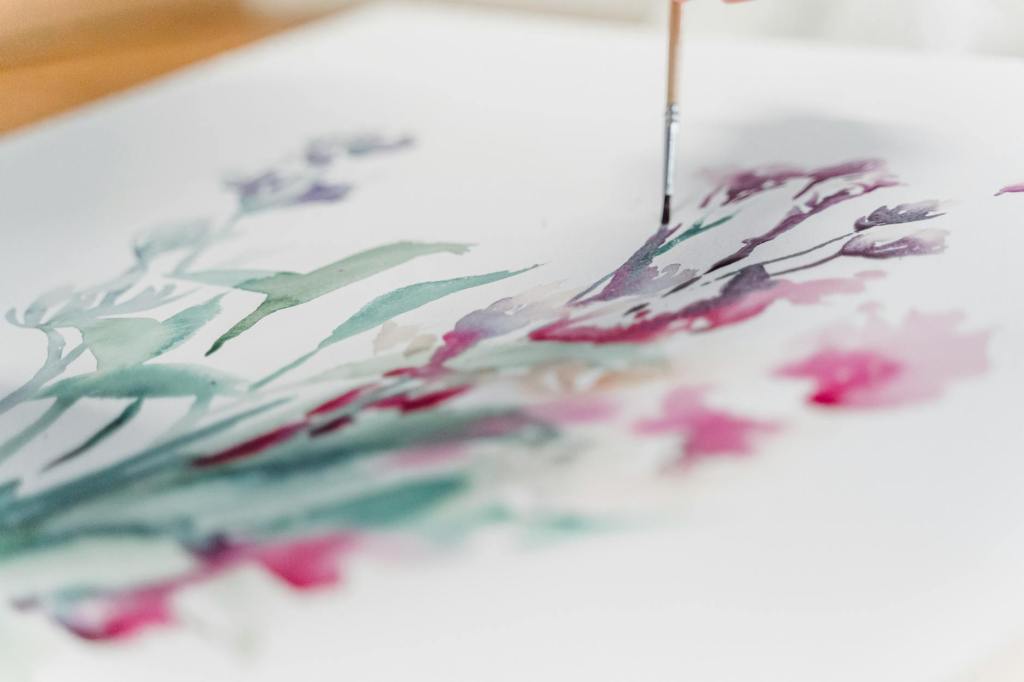
And because words are only one way of expressing emotion, combining the Feelings Wheel with creative artmaking can be incredibly powerful. Art gives your inner world shape, color, and voice — even when words are hard to find.
Below are three creative art projects you can try after exploring the Feelings Wheel to help process and integrate what you discover.
1. Color Mapping Your Emotions
Purpose: To visually explore the complexity of your current emotional state.
What You’ll Need:
- Watercolors, colored pencils, or markers
- Paper or canvas
- A copy of the Feelings Wheel
How to Do It:
- Start by choosing 3–5 words from the Feelings Wheel that describe how you feel right now.
- Assign each feeling a color or shape.
- On your paper, let the colors blend, overlap, or contrast — whatever feels most authentic.
- As you work, notice how your emotions shift or interact visually.
Reflection Prompt:
What do you notice about how these feelings coexist or blend? Which colors dominate or fade?
2. The “Emotion Behind the Emotion” Collage
Purpose: To uncover deeper layers of feeling beneath the surface.
What You’ll Need:
- Magazines, newspapers, or printed images
- Scissors and glue
- A piece of cardstock or sketchbook page
- A pen or marker
How to Do It:
- Pick one strong emotion from the Feelings Wheel — perhaps one you’re struggling to understand.
- Find images, textures, or words that remind you of that feeling.
- Arrange them into a collage without overthinking.
- Once finished, write a few sentences about what the collage reveals.
Reflection Prompt:
Did this process reveal anything unexpected about your emotion’s root cause or expression?
3. Transforming Emotion Through Movement and Marks
Purpose: To physically release and transform emotional energy.
What You’ll Need:
- Large paper roll or canvas
- Charcoal, chalk, or paint
- Music that resonates with your current mood
How to Do It:
- Play music that matches your emotional energy — maybe something intense, maybe something soft.
- Using your whole body, make marks on the paper: big gestures, quick lines, spirals, or swirls.
- When you feel ready, switch to music that feels soothing or uplifting and add new layers or shapes on top.
Reflection Prompt:
What changed in your body and emotions as you moved from one song to another? How does your artwork reflect that shift?
Closing Thoughts
The Feelings Wheel helps us find language for our inner world — but art helps us speak that language more deeply. When you pair emotional vocabulary with creative expression, you invite your mind and body to work together toward understanding and healing.
So next time you feel something complex or overwhelming, reach for your Feelings Wheel — and maybe some paint or paper, too. Sometimes the clearest insight comes not from thinking harder, but from creating with intention.





 WAVES OF EXPRESSION
What did you think of this idea??