The concept of the Window of Tolerance comes from trauma research and psychology, and it describes the emotional zone in which we are calm, regulated, and able to think, learn, and connect with others. When we’re within our window, life may still be stressful, but we can respond with resilience rather than reacting from fear or shutdown.

When we move outside of our window, our nervous system becomes overwhelmed. This can look like escalating into hyperarousal (fight/flight) or dropping into hypoarousal (freeze/avoidance). Over time, with awareness and practice, we can both return to and expand our window of tolerance—allowing us to navigate life with more compassion for ourselves and how we are feeling.
The States of the Window of Tolerance
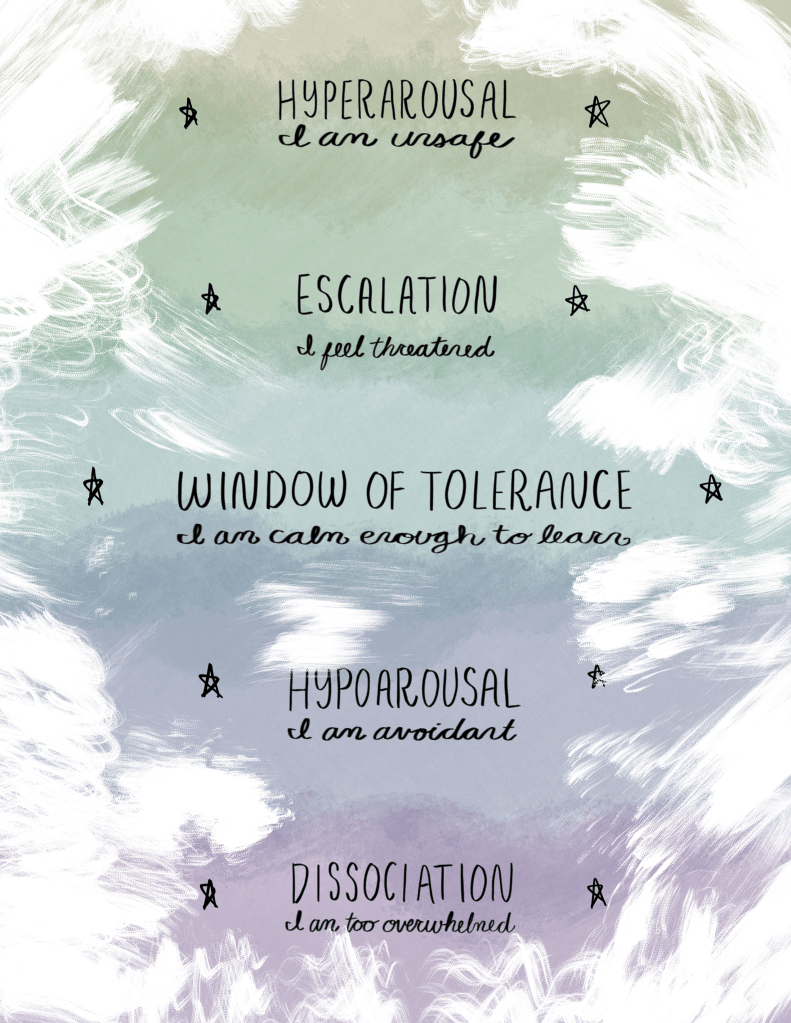
- Window of Tolerance (Calm Enough to Learn): This is our regulated state. We feel grounded, curious, and present. Our body is relaxed enough for us to think clearly and engage with others.
- Escalation (I Feel Threatened): Our nervous system starts to move toward fight-or-flight. We feel tension, irritability, or defensiveness.
- Hyperarousal (I Am Unsafe): The body is in full fight-or-flight mode. Heart rate rises, thoughts race, and fear narratives often take over.
- Hypoarousal (I Am Avoidant): We shut down. Emotions feel flat, and motivation is low. It’s a state of numbness or emotional withdrawal.
- Dissociation (I Am Too Overwhelmed): A step deeper than hypoarousal—our mind disconnects from the present because the emotional weight feels unbearable.

Looking back on my teaching experience, I can find myself in hyperarousal. I remember my body feeling tense, my thoughts were always racing, and I felt on guard constantly. The trigger wasn’t the classroom itself, but my internal narrative whispering: “I’m not good enough.” That consistent self-criticism pushed me out of my window of tolerance into a place of fear and self-doubt, making it harder to teach with presence and confidence.

During a particularly difficult and depressive season, I experienced dissociation. I felt like I was moving through life in a haze—present physically, but emotionally and mentally distant. Again, my internal narrative played a powerful role: “I am not enough.” That painful belief made it nearly impossible to stay in my window of tolerance, pulling me into shutdown and disconnection.
During both of these experiences I found myself simply moving through and surviving instead of truly living. Looking back I realize our internal narratives, as well as external factors (stress, relationships, environment, demands), deeply impact whether we remain inside our window of tolerance or slip outside of it….
…The good news is that our window of tolerance is not fixed. Today I find myself looking back on my short lived teaching career with grace for myself, and deep gratitude and joy for my experience. And while I still experience seasons of depression, I have peace during those times because I know I will get through them, and I am growing stronger at developing tools to help remain within my window of tolerance.
When we find ourselves outside of our window of tolerance, it is really hard to even realize we are outside our capacity let alone bring ourselves back. This is why the majority of the work has to be done while inside our window…from a place of safety. This is where we learn the work that needs to be done and what techniques work best for us. This active practice makes it easier to spring back if we find ourselves outside our window.

With practice, we can strengthen our window of tolerance. So that we are able to stay regulated for longer periods and recover more quickly when we get knocked out of balance.
Some strategies include:
- Mindfulness: Staying present with our body, breath, and environment helps us notice when we’re escalating or shutting down.
- Positive Self-Talk: Rewriting internal narratives from “I’m not good enough” to “I am learning and growing” can shift our nervous system toward safety.
- Deep Breathing: Long, slow breaths signal to the body that we are safe.
- Grounding Exercises: Using the five senses (what I see, hear, touch, smell, and taste) to anchor in the present moment.
- Physical Movement: Gentle stretching, walking, or dancing can release stored stress energy.
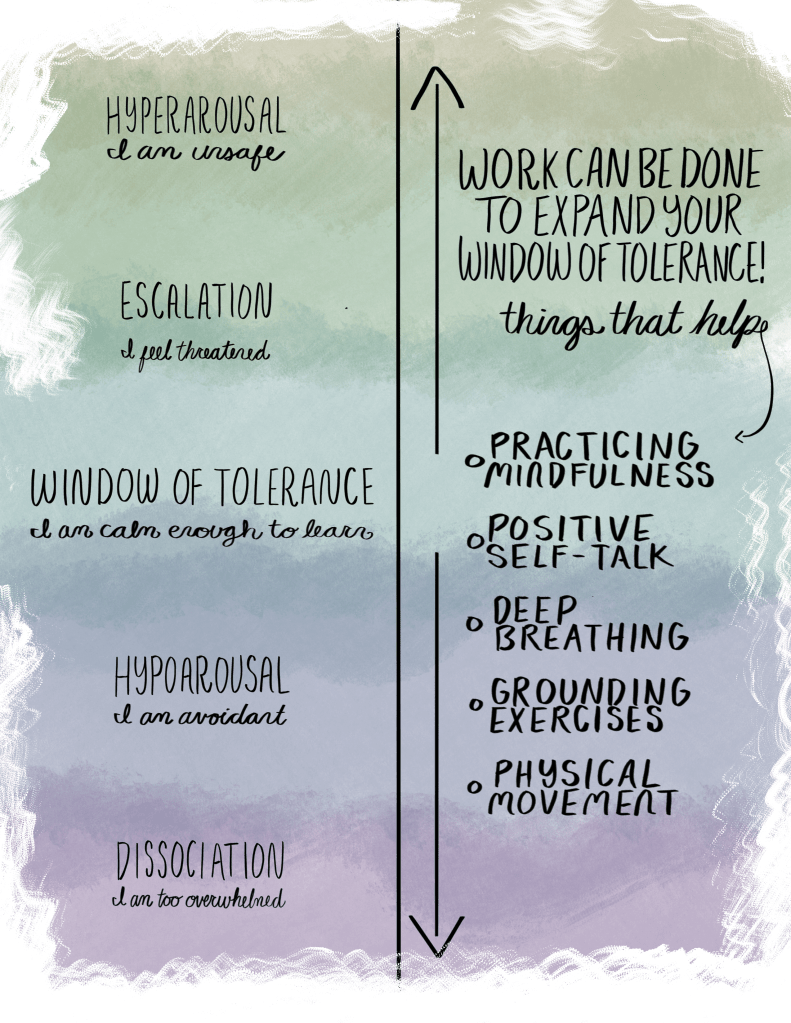
Each of these practices works to not only bring us back into our window but to expand it, so we have more space for calm, resilience, and growth.

Art Projects to Explore the Window of Tolerance
Art can be another tool to process emotions and visualize our window of tolerance. Here’s three project ideas to try out for further processing:
The Window Collage:
- Draw a window on a large sheet of paper.
- Inside the window, collage or draw images that represent calm, safety, and your regulated state.
- Around the outside edges, add words, images, or colors that symbolize hyperarousal (chaos, fear) and hypoarousal/dissociation (numbness, emptiness).
- Reflect: What helps you stay inside the “window” in your real life?
Internal Narrative Rewrite:
- Fold a piece of paper in half.
- On the left side, write or illustrate your current internal narratives (e.g., “I’m not good enough”).
- On the right side, rewrite them as compassionate truths (e.g., “I am enough. I am growing.”).
- Decorate both sides with colors, shapes, or images that capture the “feeling tone” of each narrative.
Body Map of Regulation: body scan video walkthrough here
- Trace an outline of your body on a piece of paper.
- Use colors or textures to fill in where you feel hyperarousal (tight chest, clenched fists), hypoarousal (heavy limbs, foggy head), and calm regulation (soft belly, open breath).
- Add grounding or soothing symbols in the places that need more support.
- Reflect: How can I bring comfort to these areas when I notice them activating?
The window of tolerance is a compassionate framework for understanding our emotions and nervous system. Rather than judging ourselves for being “too much” or “not enough,” we can recognize when we’re outside our window and gently guide ourselves back in. With tools like mindfulness, grounding, positive self-talk, and creative expression, we can both regulate in the moment and gradually expand our capacity for calm.

Each time we return to the window, we strengthen the message: “I am safe. I am capable. I am enough.”
For more journaling prompts grab the free PDF to print and fill out below.







 WAVES OF EXPRESSION
What did you think of this idea??