Life is full of opportunities to grow, stretch, and expand who we are. Yet it’s also filled with moments where we crave comfort and safety. One helpful tool to understand what’s going on internally is the Circle of Growth. This framework shows how we move through three main zones: the Comfort Zone, the Growth Zone, and the Danger Zone.
By learning to recognize where we are, we can better navigate challenges and support ourselves in a way that promotes sustainable growth and resilience.
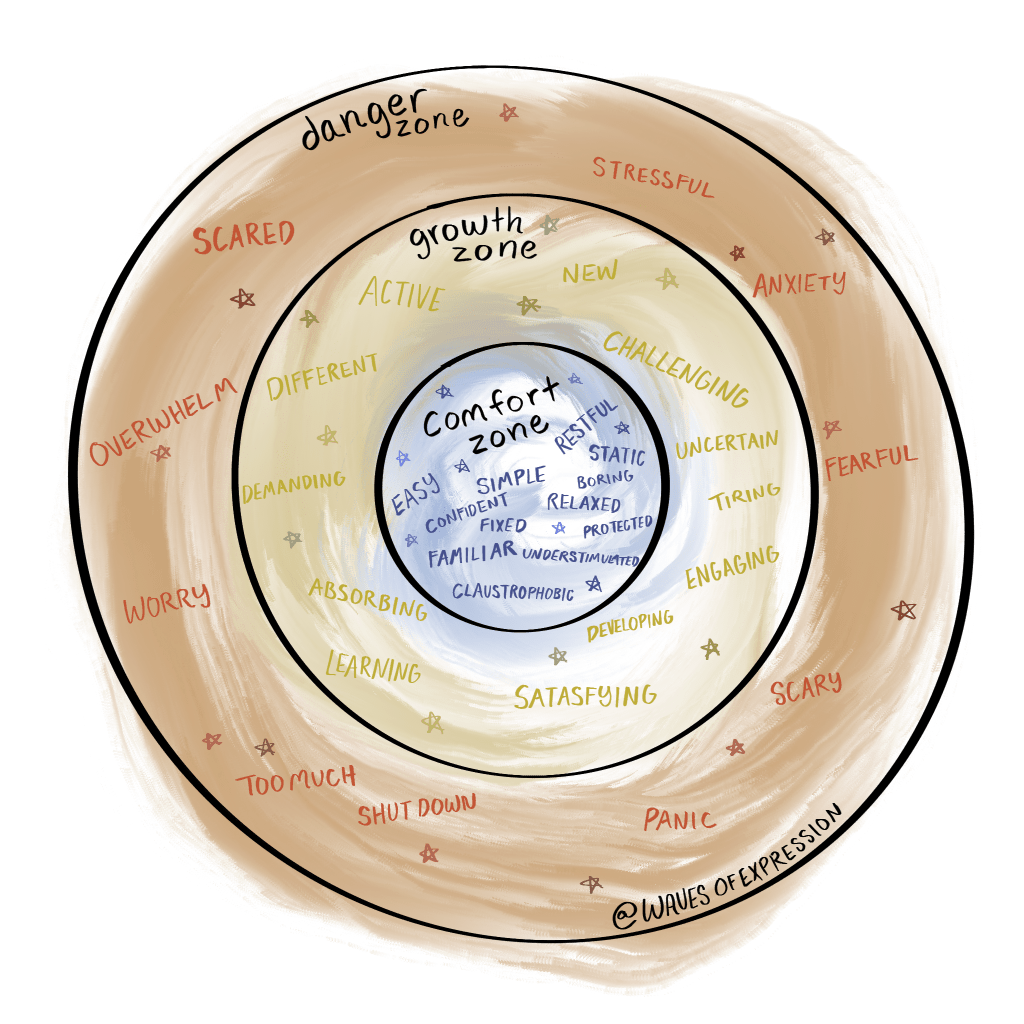
The Comfort Zone: Our Center of Safety
At the center of the circle is the Comfort Zone. This is where we feel safe, steady, and at ease. Here, we know what to expect, and our nervous system can rest. The comfort zone is essential—it allows us to recharge, integrate what we’ve learned, and feel grounded.
However, staying in the comfort zone too long can sometimes keep us from new opportunities. Too much comfort can create stagnation, avoidance, or even fear of leaving what feels familiar.
The Growth Zone: Where Expansion Happens
The next ring outward is the Growth Zone. This is where learning, exploration, and new possibilities live. In this space, we take risks that stretch us beyond what’s familiar but not so far that we lose our sense of balance.
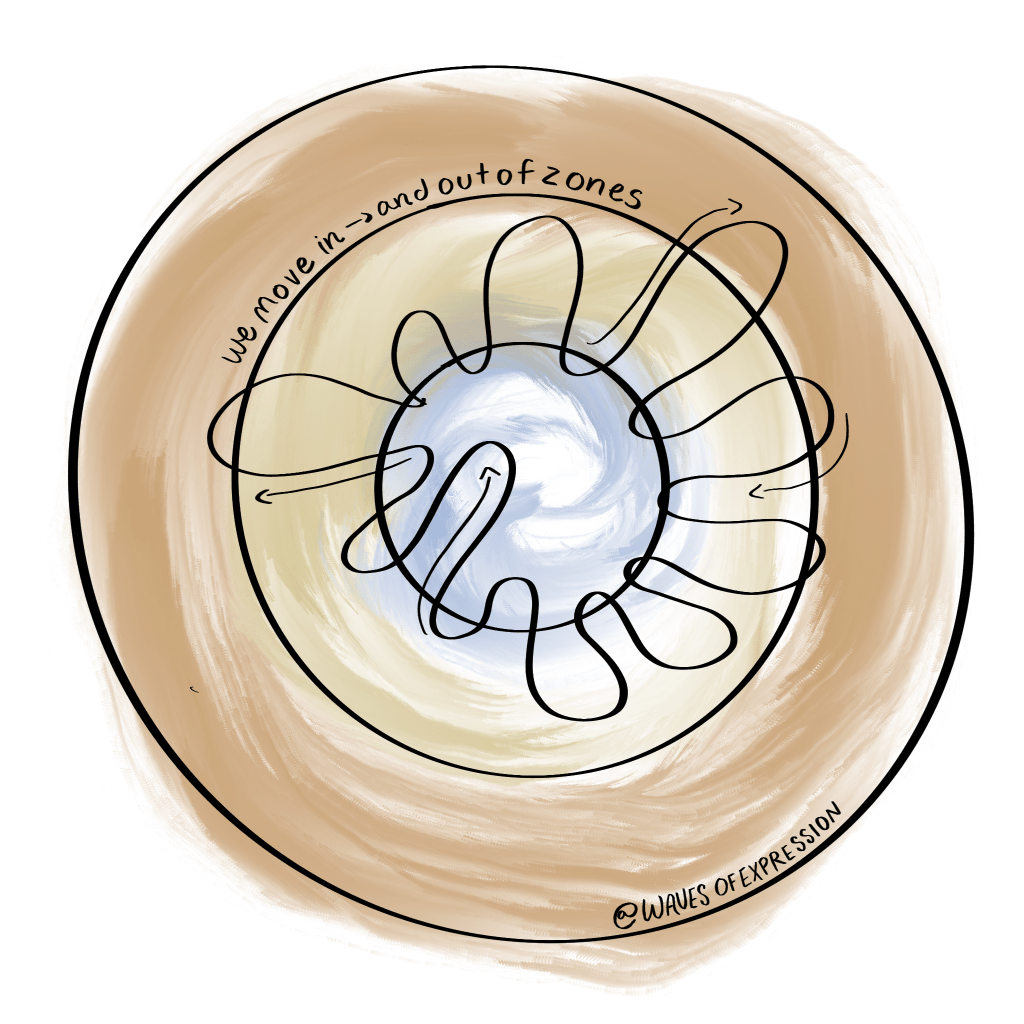
The growth zone is exciting—it’s where we build new skills, challenge old patterns, and discover parts of ourselves we didn’t know were there. However, we can’t stay here forever. Growth requires energy and courage, and without periods of rest back in the comfort zone, we can quickly burn out.
The Danger Zone: Overwhelm and Retreat
If we push too far past growth, we enter the Danger Zone. Here, instead of feeling stretched, we feel overwhelmed. The nervous system may interpret this as unsafe, and we may shut down, panic, or avoid the experience altogether.
The danger zone isn’t “bad,” but it signals that we’ve gone beyond what we can process at the moment. Over time, repeatedly pushing ourselves here can lead to exhaustion, fear, or even shrinking our capacity for growth.
Moving Between the Zones
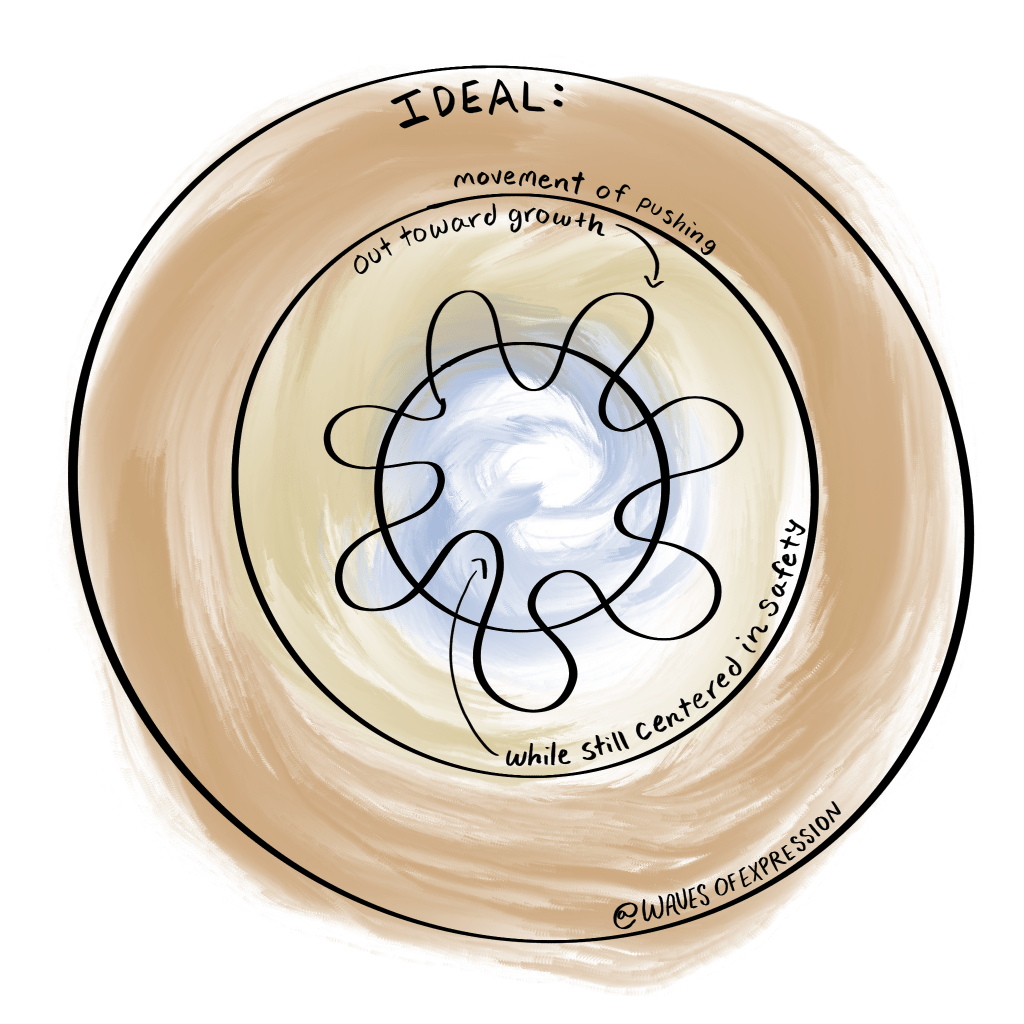
We are constantly moving between these zones depending on what life brings. Ideally, we live centered in comfort while gently pushing out toward growth and occasionally retreating when needed. But real life isn’t always balanced.
- Sometimes, we stay in the comfort zone too long and avoid growth.
- Sometimes, we spend too much time in growth and never let ourselves rest.
- Sometimes, life pushes us straight into the danger zone without warning.
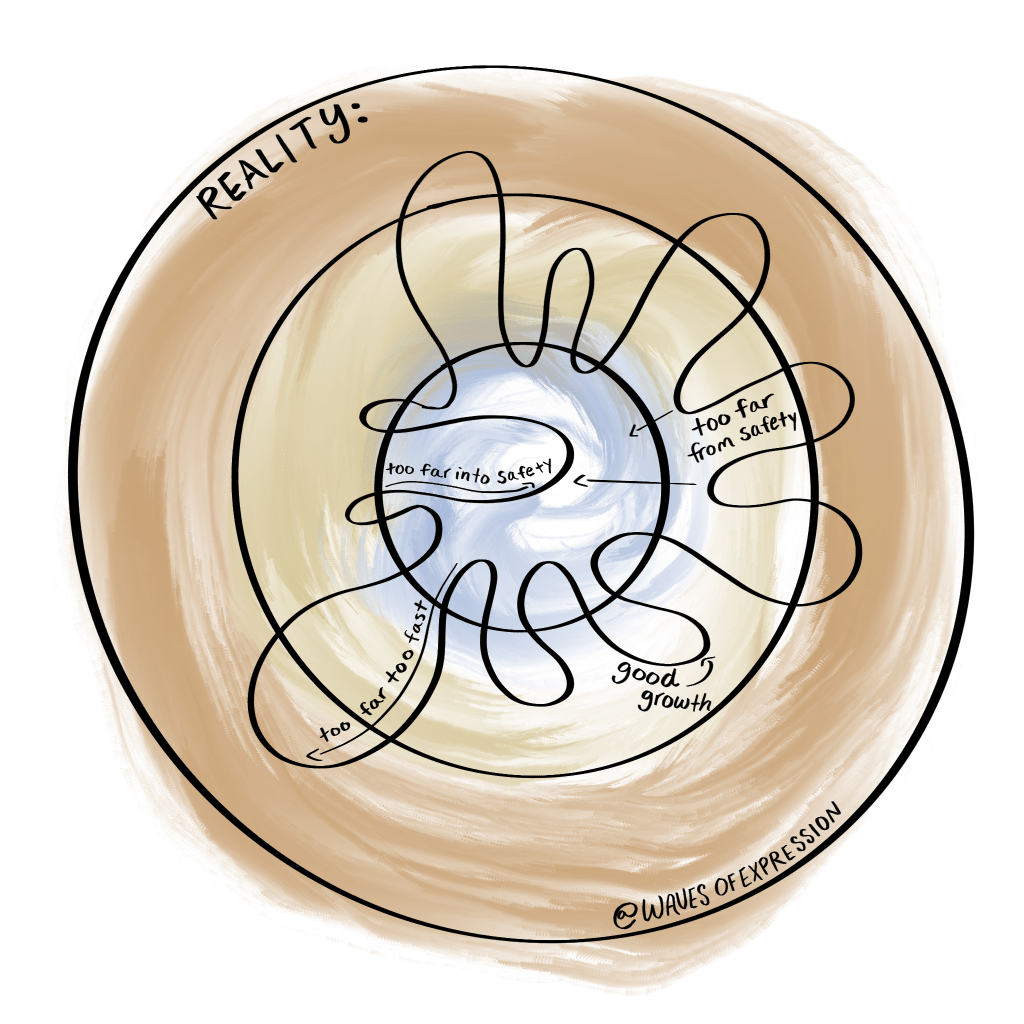
The key is noticing where we are and allowing ourselves to shift back when necessary.
Growing (or Shrinking) Our Circle of Comfort
Over time, our comfort zone can expand. What once felt intimidating can become familiar as we build skills, resilience, and self-trust. This is how growth sticks—we push outward, then return to rest, and repeat.
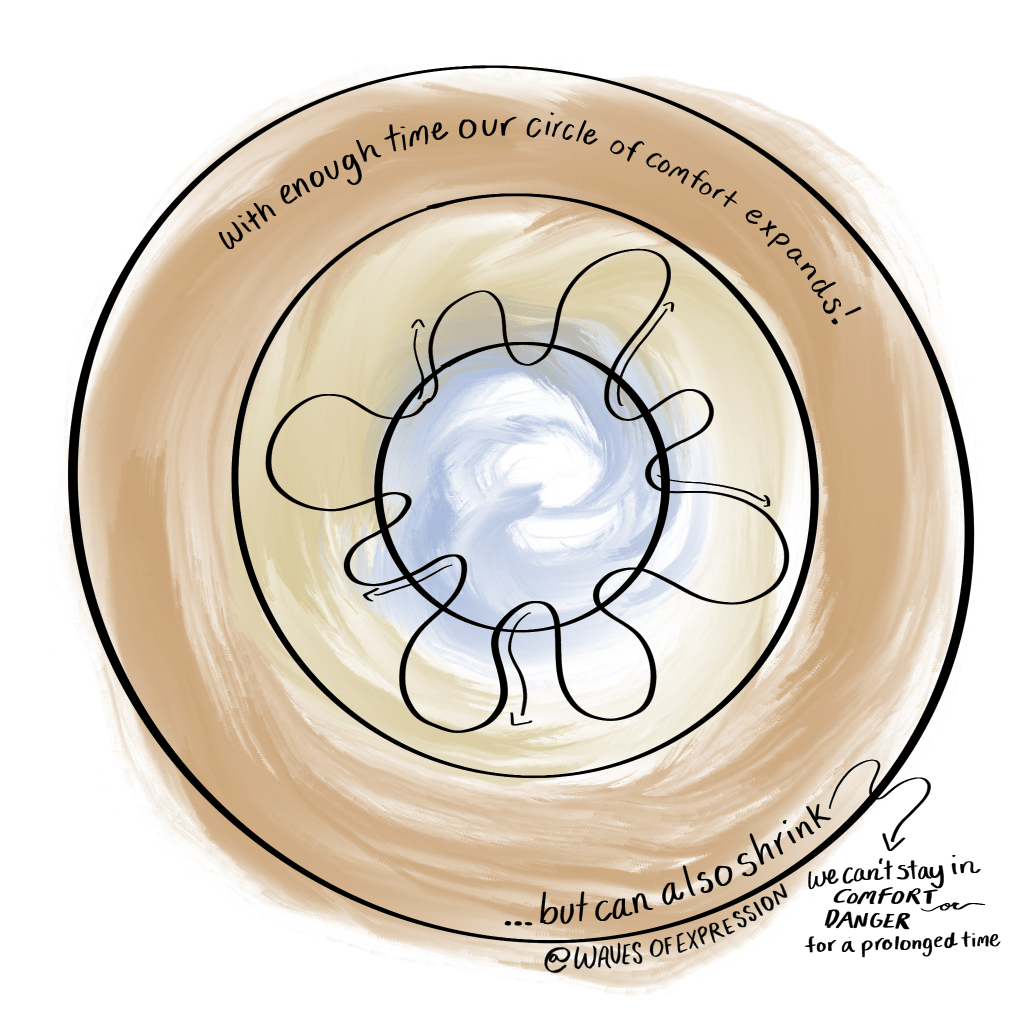
However, our comfort zone can also shrink. Stress, trauma, or ongoing overwhelm can make things that once felt manageable now feel threatening. When this happens, patience, self-compassion, and support are essential for slowly rebuilding that sense of safety.
Final Thoughts
The Circle of Growth reminds us that growth is not linear—it’s dynamic, and it ebbs and flows with the seasons of life. We need the comfort zone to ground us, the growth zone to expand us, and the awareness to know when we’ve gone too far into danger.
When we understand these circles, we can approach our lives with greater compassion, giving ourselves permission to rest, stretch, or retreat as needed. Over time, this rhythm of movement allows us to expand our capacity and create a deeper sense of resilience and balance.
Art Reflections
1. Paint or Collage Your Circles
- Process: On a large sheet of paper, draw three circles (Comfort, Growth, Danger). Use colors, textures, or collage materials to represent how each zone feels for you—calm, exciting, overwhelming, etc.
- Reflection: Notice which colors or images dominate. Ask yourself: Which circle do I spend the most time in right now?
2. Zone Mapping with Symbols
- Process: Create three concentric circles. Inside each, instead of words, draw or paint symbols that represent what belongs in each zone (e.g., a pillow for comfort, a mountain for growth, a storm cloud for danger).
- Reflection: Step back and see what story your symbols tell about your inner landscape.
Find the ad free PDF resource here with additional art projects and journaling prompts!





 WAVES OF EXPRESSION
What did you think of this idea??