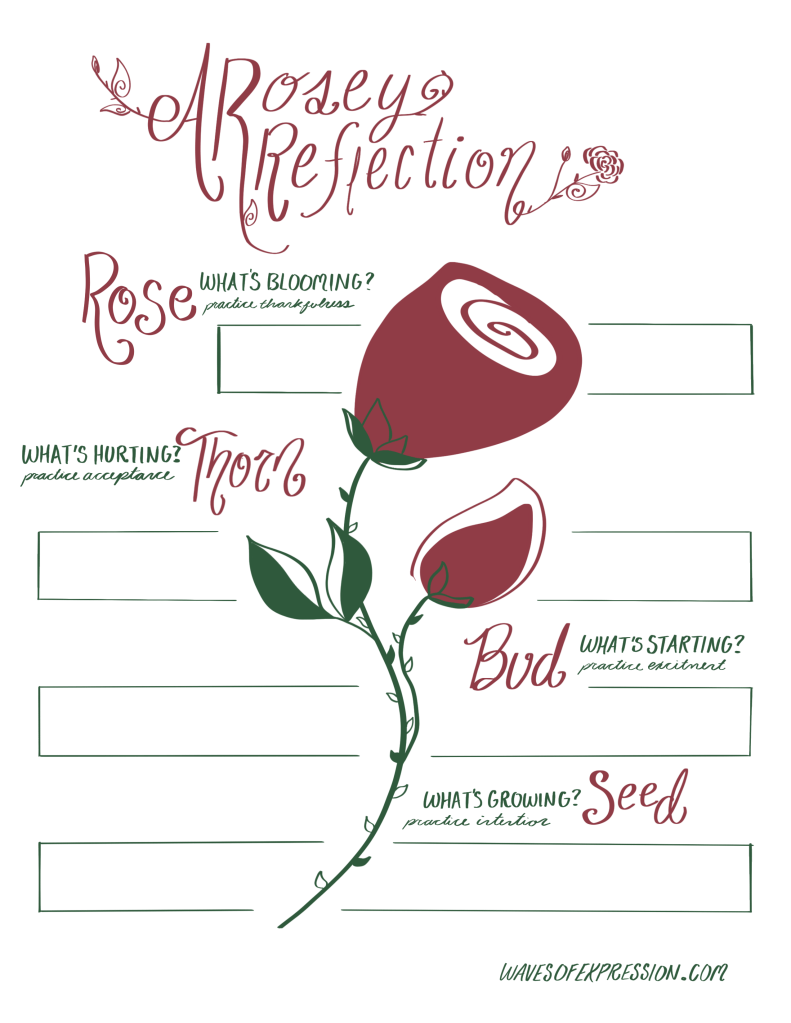
Sometimes life moves so fast that we don’t give ourselves a chance to notice what’s happening inside. The Rosy Reflection technique is a simple, yet powerful way to slow down, reflect, and practice intention in our daily lives. Inspired by the natural imagery of roses, this method invites us to explore four key areas of our experiences—what’s blooming, what’s hurting, what’s starting, and what’s growing. Each part comes with a gentle practice to help us process, celebrate, and move forward.
1. What is Blooming (Rose) – Practicing Thankfulness
Take a moment to notice the things in your life that are flourishing. Maybe it’s a friendship, a creative project, or a personal habit you’ve been nurturing. These are the “roses” in your life—the things that bring beauty and joy. Spend a few minutes practicing thankfulness for these blooms. Write them down, sketch them, or simply sit with gratitude for what is flourishing around you.
2. What is Hurting (Thorn) – Practicing Acceptance
Life isn’t all petals and beauty—there are thorns, too. These are the parts of your life that bring discomfort, sadness, or challenge. Instead of pushing these feelings away, practice acceptance. Acknowledge them, name them, and give yourself permission to feel. This doesn’t mean you have to like the pain, but noticing and accepting it allows you to move forward with gentleness toward yourself.
3. What is Starting (Bud) – Practicing Excitement
New beginnings are everywhere, even in the smallest moments. These are the buds—ideas, habits, relationships, or opportunities that are just starting to show themselves. Allow yourself to feel the excitement of these new possibilities. Write about them, visualize them, or imagine how they might grow. Let your curiosity and anticipation guide your reflection.
4. What is Growing (Seed) – Practicing Intention
Finally, consider the seeds in your life—the things you’ve planted that are quietly growing, even if you can’t see immediate results. These might be long-term goals, personal growth, or relationships in development. Practicing intention here means noticing these seeds and asking yourself what care they need to flourish. What actions, thoughts, or habits will help them grow? How can you nurture them with purpose?
The beauty of the Rosy Reflection technique is how it allows us to honor the full spectrum of our experiences—joy, pain, new beginnings, and ongoing growth. You can practice this weekly, monthly, or even daily if you like. Grab a journal, find a quiet space, and let your roses, thorns, buds, and seeds guide you to a place of gratitude, acceptance, excitement, and intention.
Art Project: Rosy Reflection Watercolor Collage
Materials Needed:
- Watercolor paper or a sketchbook page
- Watercolor paints and brushes
- Pencil and fine-liner or pen
- Optional: colored pencils, markers, or gel pens
- Optional: magazine clippings or stickers for collage
Instructions:
- Divide Your Page: Lightly sketch four sections on your page labeled: Rose (Blooming), Thorn (Hurting), Bud (Starting), and Seed (Growing).
- Choose Colors or Symbols: Pick colors or shapes that feel right for each section. For example:
- Rose/Blooming = bright, warm colors
- Thorn/Hurting = darker or muted tones
- Bud/Starting = soft, fresh colors
- Seed/Growing = earth tones or green hues
- Create Your Backgrounds: Use watercolor washes to fill in each section, letting the colors flow naturally. Don’t worry about perfection—the blending and texture will reflect the organic nature of growth and life.
- Add Visual Symbols:
- Rose/Blooming: Paint or sketch petals, flowers, or things you are thankful for.
- Thorn/Hurting: Add jagged lines, thorn shapes, or abstract marks representing challenges or pain.
- Bud/Starting: Draw small buds, sparks, or tiny symbols for new beginnings.
- Seed/Growing: Paint small seeds, roots, or shapes that represent growth in progress.
- Layer Details: Once dry, you can go back in with fine-liners, markers, or colored pencils to add details, words, or short reflections for each section. For example, in the Rose section, write one thing you are grateful for, or in the Seed section, note an intention for growth.
- Reflect: Step back and observe your page. Notice how each section interacts—how your joys, challenges, beginnings, and intentions are connected. Let this artwork be a reminder of your journey and a visual anchor for reflection and mindfulness.






 WAVES OF EXPRESSION
What did you think of this idea??