Feeling emotions fully is a courageous act, especially when we’ve learned to avoid discomfort.

In my own hurt, my impulses are to distract myself with shopping. While enjoyable in themselves, these activities became shields against feeling anger and sadness.
What if instead, I pause and allow myself to feel? Taking a few deep breaths, shifting the conversation, or simply noticing the sensations in my body could help me regulate my emotions.
Helpful tools to practice feeling your emotions:
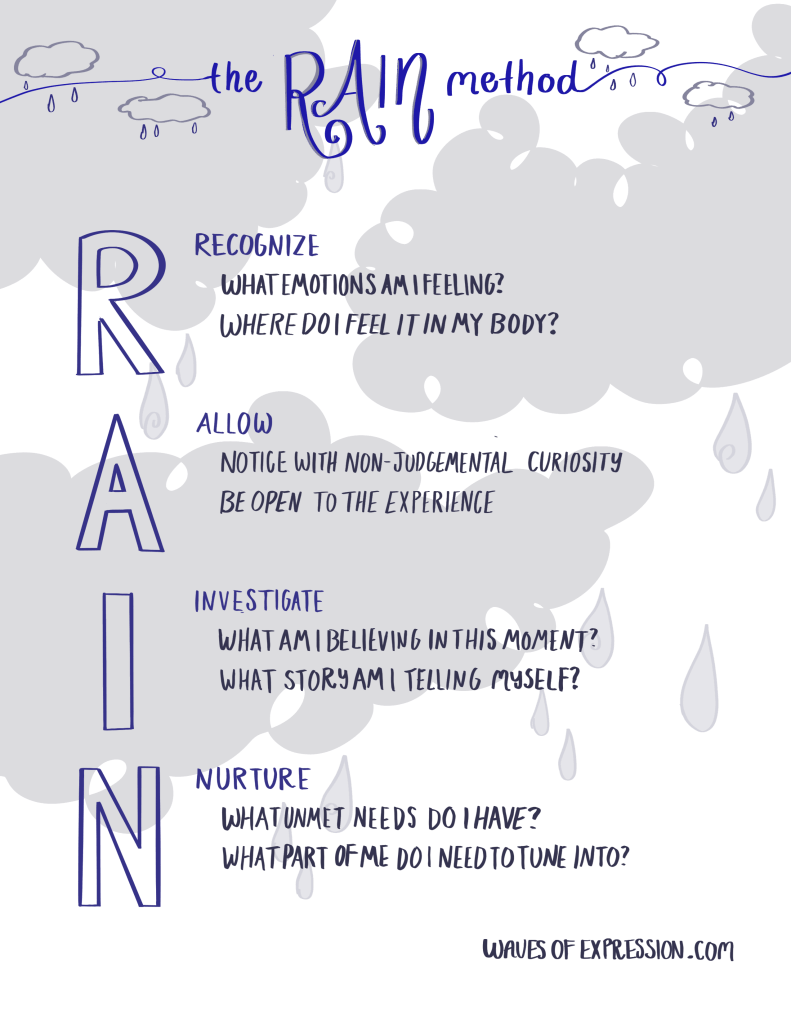
- The RAIN Technique: Recognize what you’re feeling, Allow the feeling without judgment, Investigate the sensation in your body, and Nurture yourself with kindness.
RAIN is an acronym that stands for:
- R – Recognize
- A – Allow
- I – Investigate
- N – Nurture
- Physical Release: Activities like punching a pillow, shaking out your hands, or stretching can help release built-up tension.
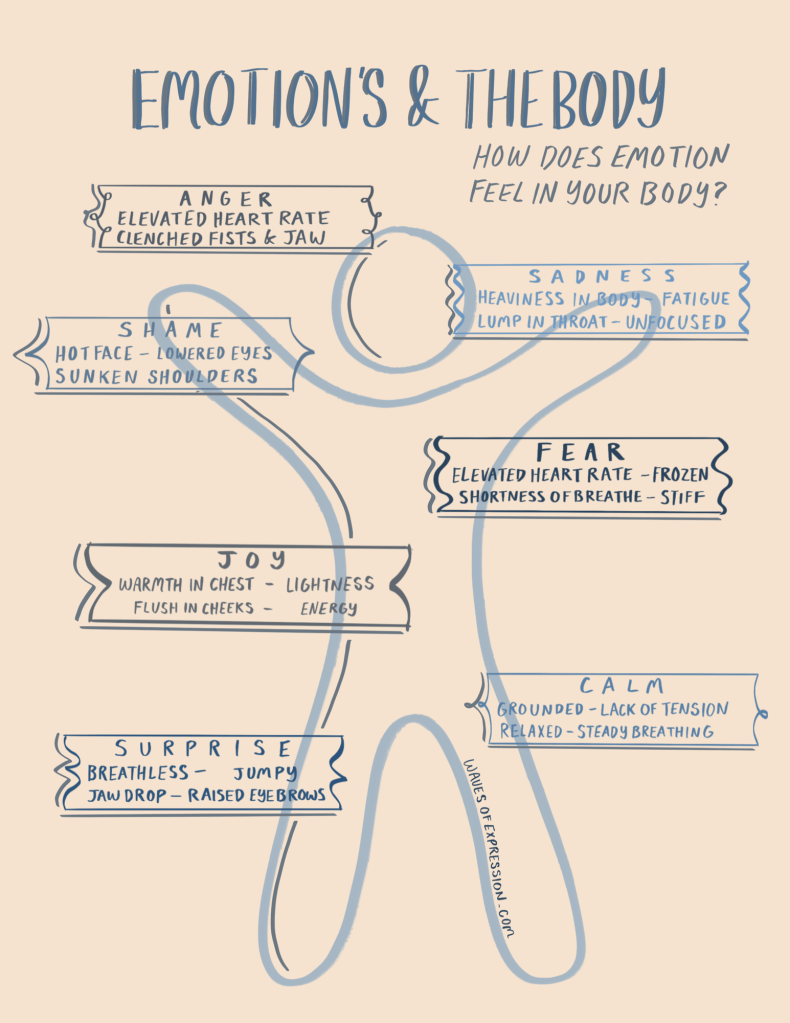
Here are a few examples of how emotions might show up physically:
- Anger — elevated heart rate, clenched fists or jaw, flushed face, tension across the shoulders.
- Sadness — heaviness in the chest or limbs, fatigue, lump in the throat, watery eyes, difficulty focusing.
- Shame — heat rising to the face, lowered eyes, collapsed posture, rounded shoulders, desire to shrink.
- Fear — racing heart, shallow breath, frozen or stiff muscles, tight chest, alertness or scanning.
- Joy — warmth in the chest, energy through the limbs, lightness, a spontaneous smile, steady yet open breathing.
- Calm — grounded feet, steady breath, relaxed muscles, a quiet mind, sense of safety.
- Surprise — breathless or jumpy sensation, widened eyes, raised eyebrows, jaw drop, energy burst.
When we notice where an emotion lives in our body, we gain the power to pause and respond rather than react.







 WAVES OF EXPRESSION
What did you think of this idea??