
EMOTIONAL ORGANIZATION comes to mind with this practice. We often rush through the day without taking a moment to check in with ourselves. But what if you could combine mindfulness, self-awareness, and creativity to better understand how you’re feeling—and maybe even release some of the tension that builds up over time?
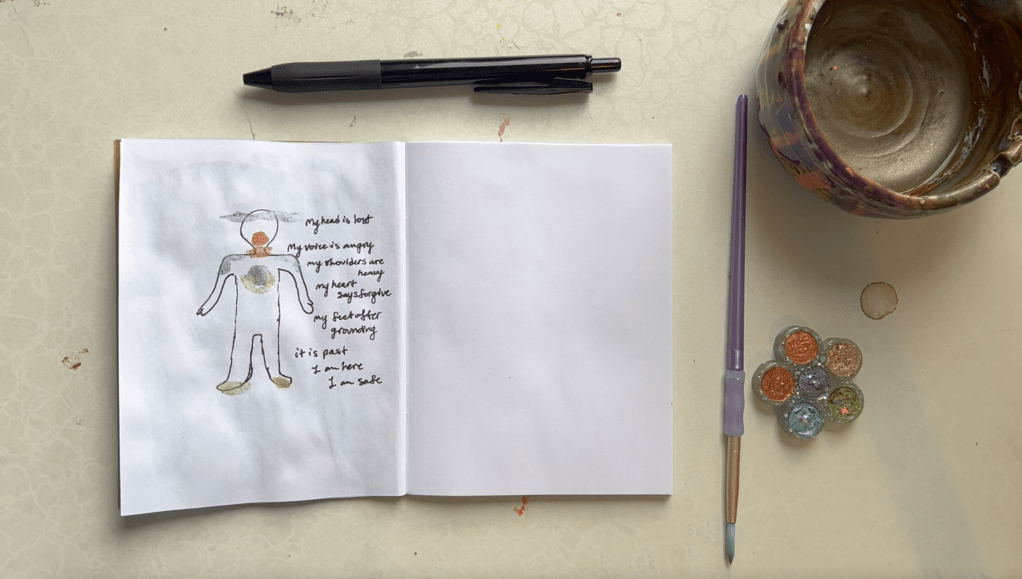
In this 20-minute art meditation, we’ll use watercolor to create a body scan. This is a simple yet powerful practice to connect with your body, express your emotions, and process any stress or tension you might be carrying. The beauty of this exercise is that it’s not about creating a perfect piece of art—it’s about using the act of painting to tune into your emotions and physical sensations in a gentle, creative way.
CLICK HERE: for the video walkthrough!
What You’ll Need:
- Watercolor paints (use any colors that resonate with you find my watercolor line here!)
- Watercolor paper (or your safe place journal, find one here!)
- Brushes (a medium or small round brush is a good choice)
- A glass of water (to rinse your brushes)
- A quiet space where you can relax and focus on the meditation!
How to Start
1. Outline the Body
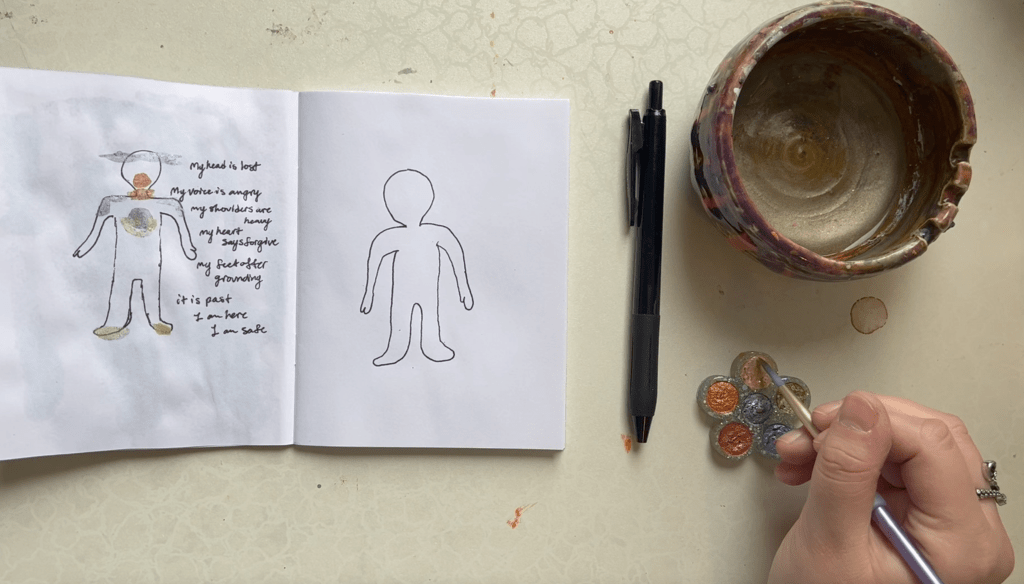
Begin by lightly sketching the outline of a human body on your watercolor paper. This doesn’t have to be perfect—just a simple figure that you can use as a guide for your body scan. You can use a pencil to lightly draw the outline, a pen, or skip the outline altogether and just allow your colors to flow freely.
2. Start at the Head
Start at the top of your body outline with your watercolor. Think about how you’re feeling in your mind—are you calm, scattered, anxious, overwhelmed? Choose a color that feels connected to your emotions. For example:
- Blue might represent calm or peace.
- Red could symbolize anxiety or energy.
- Yellow may express joy or clarity.
As you paint the head area, focus on how your thoughts are affecting your body. Do you feel tension in your forehead, your jaw, or your eyes? Gently allow the watercolor to reflect those feelings, whether you’re painting solid colors or letting them bleed and mix in a more abstract way.
Mindful tip: As you feel and look for tension in your body, focus on your breath, and slowly start to release that tension as you work down.
3. Move Down to the Neck and Shoulders
As you move down to the neck and shoulders, notice any physical sensations you might be holding onto here. Are your shoulders tight? Is there tension in your neck? Do you feel a sense of heaviness or weight?
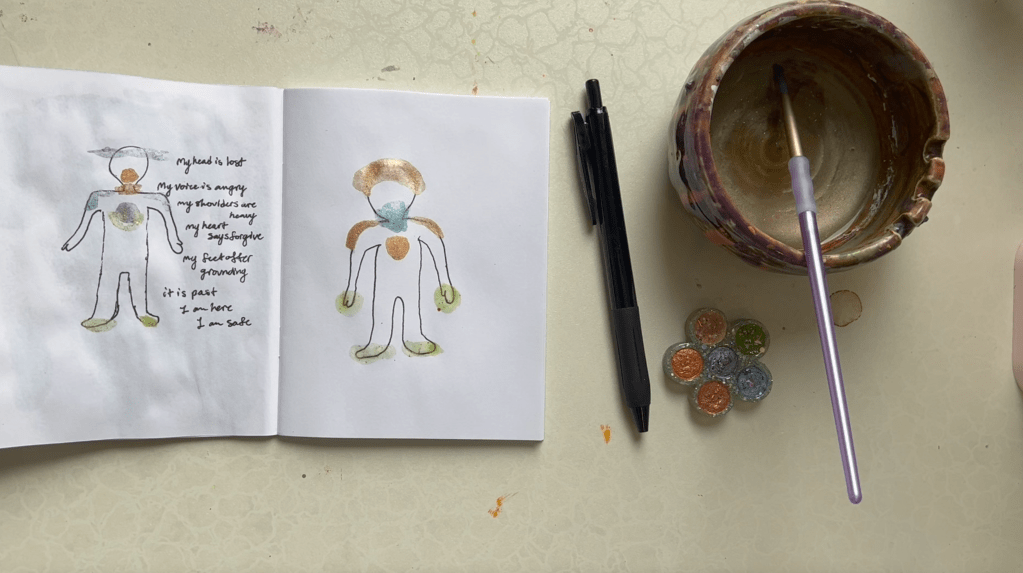
Use your colors to express what you’re feeling in this area. Maybe you choose darker colors if you’re holding a lot of stress, or lighter tones if you’re feeling a sense of release. As you paint, let go of any judgment or pressure to make it look a certain way. This is your personal expression, and the goal is to bring awareness to these sensations without any expectation.

4. Chest and Heart Area
The chest and heart space can hold a lot of emotions. You may notice feelings of vulnerability, love, grief, or even anxiety stored here. Paint this area with the colors that reflect what you’re experiencing emotionally.
If you feel an emotional blockage, you might notice that your brush feels heavier or that you hesitate in this area. That’s okay. Take your time. Let your brush glide over the paper, symbolizing the flow of energy through your heart center.
5. The Belly and Solar Plexus
The belly is a place where we often store nervous energy or emotions that haven’t been fully processed. As you move to this area, check in with any sensations you might be experiencing—whether it’s a knot, flutter, or calm feeling. Paint your belly with a color that reflects how you feel here.
You may want to add layers of paint or let the colors swirl to express the movement or stillness in this part of your body. The beauty of watercolor is that it’s fluid and spontaneous, just like emotions can be.
6. The Lower Back and Hips
Next, move to your lower back and hips. This area of the body is deeply connected to our sense of stability, security, and personal boundaries. If you feel any tension in your back or hips, paint that sensation. Maybe your color choices here reflect a sense of grounding, or perhaps there’s a feeling of unease.
Use this time to breathe deeply and relax into the process, recognizing the parts of your body that may be holding on to stress. Allow your brush to move freely, as you let go of any stiffness or tightness in your lower back and hips.
7. Legs and Feet
Finally, move down to your legs and feet. These are the areas connected to our sense of movement, action, and support. Do you feel energized, or perhaps tired or ungrounded? What emotions are you experiencing here? Paint your legs with colors that represent your physical and emotional state.
As you work your way down to the feet, think about the concept of support. Are you feeling supported, or do you need more grounding? The feet are our connection to the earth, so you may wish to paint them with earthy tones like browns or greens if you’re looking for stability.
8. Reflect on Your Emotions
Once you’ve painted the full outline of your body, take a moment to look at the image you’ve created. Notice any areas of your body where you’ve used bold or dark colors, and others where the paint is soft or light. This will give you insight into how your body is feeling emotionally and physically.
Take a moment to write down any emotions you’re noticing. You might want to label specific areas with words like “anxiety,” “calm,” “tired,” or “content.” It’s important to acknowledge your feelings without judgment—this is your body’s way of communicating with you.
9. End with Affirmations
Finally, end your art meditation by writing 1-3 affirmations on your painting. These affirmations should be simple, positive statements that help you feel grounded and centered. Here are a few examples:
- “I am safe.”
- “My emotions are valid.”
- “I trust myself to heal.”
- “I am supported and at peace.”
Writing these affirmations on your painting not only seals your practice with positivity but also allows you to take these affirmations into your day, helping you stay connected to your emotional well-being.

Closing Thoughts
This 20-minute watercolor body scan is a wonderful practice for connecting with your body and emotions. Whether you’re looking to release stress, process difficult feelings, or simply check in with yourself, this meditation is a beautiful way to do so.
Remember, there’s no “right” or “wrong” way to do this practice. The colors, shapes, and emotions you choose are entirely yours to explore. The more you practice, the more you’ll discover about your body’s natural responses and how to tune in to your emotional state.
If you enjoyed this practice, consider coming back to it whenever you need to ground yourself, process your emotions, or simply reconnect with your inner self.
Be sure to like, comment, and subscribe on this post. This helps it reach a wider audience and encourages me as I create these practices!
Happy mindful creating! 🌿✨




 WAVES OF EXPRESSION
What did you think of this idea??