We’ve all been there: caught in a moment that feels overwhelming, stressful, or triggering — and not quite sure why. Maybe it’s a small comment that lingers all day, or a minor inconvenience that derails our whole mood.

In the moment, everything blurs together. Thoughts, feelings, actions, and emotions collide until it’s hard to tell what’s causing what. But what if, instead of treating overwhelm as one big mess, we could slow down and separate the pieces?
By taking a minute to identify what we were thinking, feeling, doing, and experiencing emotionally, we can begin to untangle the moment and see what actually triggered our reaction.
The good news? You can start anywhere. You don’t need to have perfect clarity about your thoughts right away. You can begin with the action you were doing, the feeling in your body, or the emotion that hit first — and then build the rest from there.

Example 1: Tea and Presence
Let’s start with a positive moment.
When I sit down with a cup of tea, I notice I feel good. But why? Here’s how breaking it down helps:
- Action: I’m drinking tea. I’m practicing presence by sitting still and simply enjoying the experience.
- Emotion: I feel peace and calm.
- Feeling: The warmth of the cup relaxes me. My breath slows as I take in the aroma.
- Thoughts: I’m noticing the notes of the tea, focusing on whether it’s too hot or cool enough to sip. My focus is completely on the tea.
By pulling these apart, I can see clearly that the action of slowing down, paired with the sensory experience of warmth and aroma, leads to feelings of peace. It’s not just the tea — it’s the intentional presence I bring to the moment.

Example 2: Stress While Driving
Now let’s look at a trickier situation.
Sometimes I feel stressed while driving, even when nothing major happens. For example, if another driver cuts me off, I might feel like the rest of my trip is impacted. Breaking it down helps me see why:
- Feeling: My heart races. I grip the steering wheel tightly.
- Action: I brake because a car merged suddenly in front of me.
- Thoughts: “Why would that guy do that?” “Really, dude?” “You’re lucky I have Jesus in my heart.”
- Emotion: Anger, criticism, and a sense of being threatened.
By separating the layers, I realize my stress doesn’t just come from the action itself (someone cutting me off). It’s fueled by the thoughts I allow to linger — the narrative that keeps replaying in my head long after the moment has passed.
With this awareness, I can choose differently. I can notice those negative thoughts as they come up, interrupt the spiral, and decide not to let the narrative escalate.
Why This Works
When we slow down to separate thoughts, feelings, actions, and emotions, we:
- Gain clarity: Overwhelm feels like “everything all at once.” Breaking it apart helps us see cause and effect more clearly.
- Notice patterns: We can identify whether our overwhelm is triggered more by physical sensations, unhelpful thoughts, or lingering emotions.
- Choose new responses: Once we see where the spiral begins, we have the power to shift it.

A Practice for You
Next time you feel either deeply at peace or suddenly overwhelmed, take a minute to reflect:
- Action: What was I doing in that moment?
- Feeling: What sensations did I notice in my body?
- Thoughts: What was running through my mind?
- Emotions: What words best describe how I felt?
You can start anywhere and build the rest out from there. Over time, this simple practice can help you catch triggers earlier, enjoy positive moments more fully, and shift negative spirals before they take over.
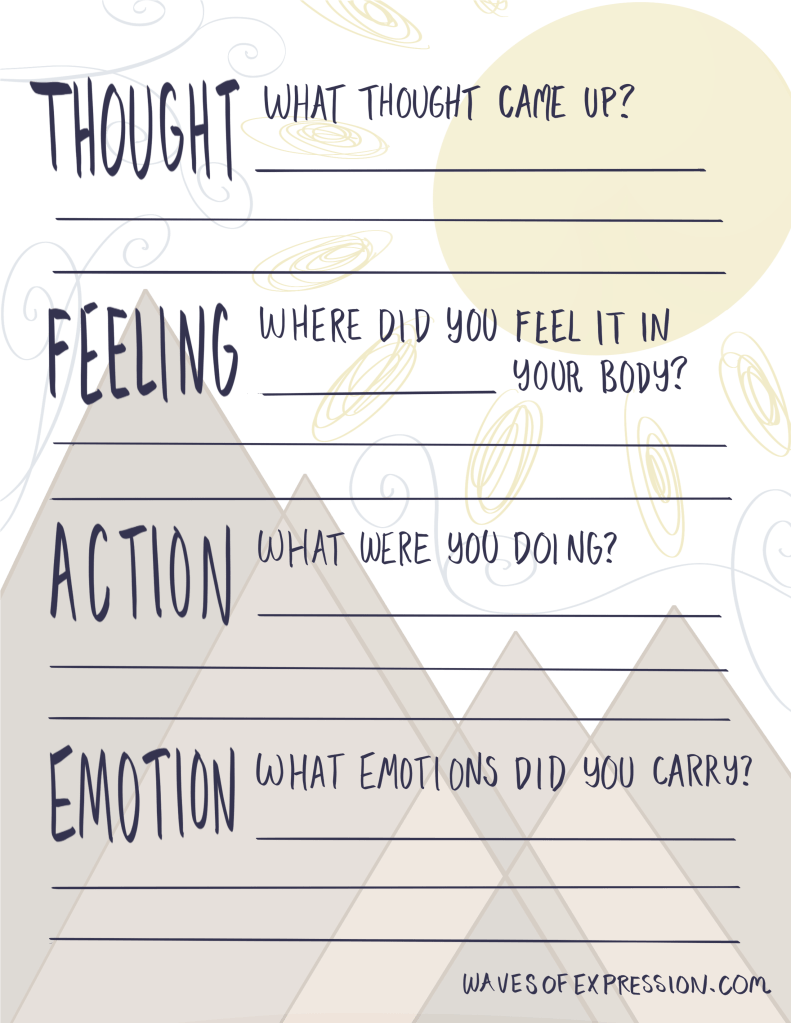
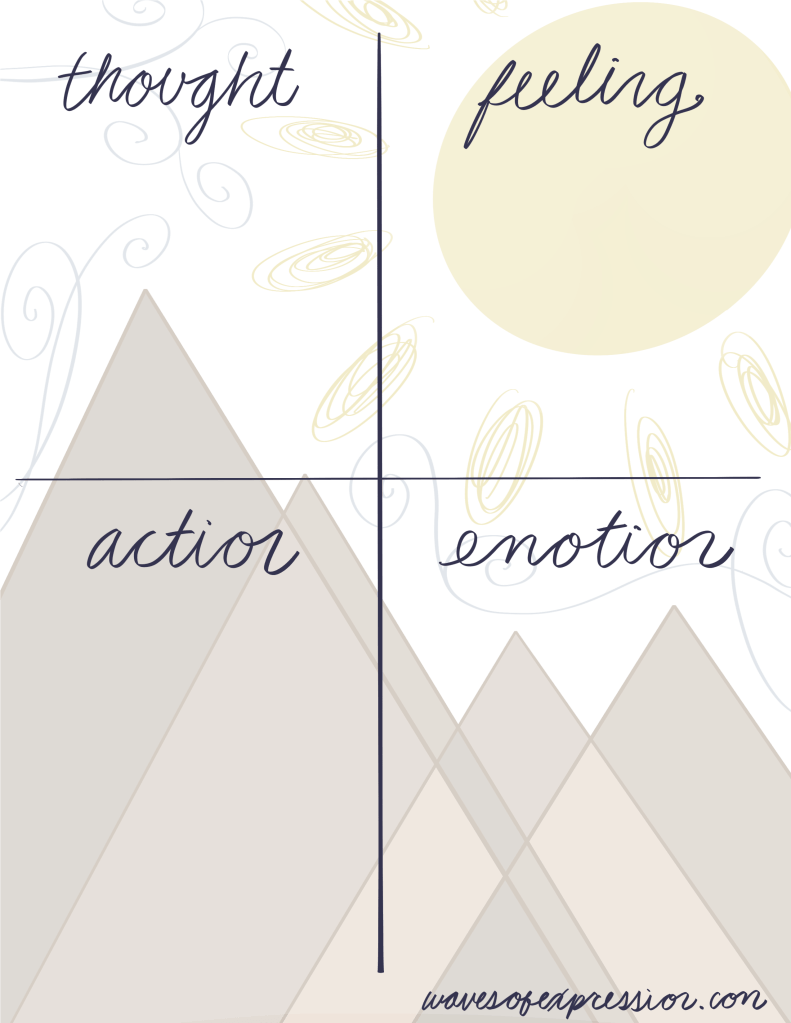
✨ Processing overwhelm doesn’t mean ignoring it or pushing it away. It means giving ourselves the tools to understand it, piece by piece, so we can move forward with clarity and choice.
Further Reflection
Journaling Prompts
1. Recall a recent moment of overwhelm. What were you doing (action)?
2. What physical sensations did you feel in your body (feeling)?
3. What thoughts came up for you in that moment?
4. How would you name the emotions you experienced?
5. Looking back, what do you think most contributed to your sense of overwhelm?
6. Recall a recent moment of peace or calm. Break it down into thoughts, feelings, actions, and emotions.
7. What patterns do you notice when you compare moments of calm with moments of overwhelm?
8. How could you shift your response the next time you feel triggered?
Art Project: Mapping the Moment
Create a visual map of a recent overwhelming or peaceful experience. Draw four circles or boxes labeled: Thoughts, Feelings, Actions, and Emotions. Inside each, illustrate or write what you noticed in that moment. Use colors, symbols, or images that represent how you experienced it. Notice which circle feels the most full and which feels empty—this can show where your attention naturally goes and what you might want to explore further.







 WAVES OF EXPRESSION
Leave a reply to ThisLittleLight Cancel reply