In our fast-paced, often overwhelming world, finding moments of calm and self-reflection is essential for mental clarity and emotional well-being. One of the most profound ways to tap into that inner peace is through the combination of art and mindfulness. This exercise of creating an attribute garden is an innovative practice that blends the therapeutic qualities of watercolor painting with the grounding principles of meditation. It’s not only about creating beautiful art—it’s about cultivating a deeper connection to yourself, your emotions, and the present moment.
Find the video walk through of this post clicking here!
Why an Attribute Garden?
Watercolor Meditation is a unique form of art and this exercise encourages you to cultivate specific qualities or attributes—such as joy, peace, love, or patience—through the symbolic act of painting a “garden.” The “garden” serves as a metaphor for the mind and soul, a place where you can plant and nurture the attributes you wish to manifest in your life.
The practice involves a few key components:
- Watercolor Painting: The fluid, gentle nature of watercolor paints symbolizes the flow of life and the fluidity of our thoughts and emotions. The soft gradients and blending of colors can evoke feelings of tranquility and mindfulness. I recommend using watercolors that excite you, such as the sparkle watercolors I sell on my site!
- Meditation: The meditative aspect centers around focusing your thoughts on specific attributes you wish to bring into your life. This could be a quality you want to develop, a mindset you want to embody, or a feeling you hope to invite into your heart.
- Reflection and Intention: As you create your garden, you intentionally reflect on the attributes you wish to nurture, focusing on the sensation of these qualities blooming and growing within you.
By integrating watercolor painting with meditation, you allow yourself to access a state of flow and presence that makes the process even more powerful.
How to Practice Attribute Garden Watercolor Meditation
If you’re new to watercolor painting or meditation, don’t worry—this practice is meant to be simple, flexible, and deeply personal. Here’s how you can begin:
Step 1: Set Your Intention
Start by reflecting on the attributes you want to invite into your life. Perhaps you need more patience in a challenging situation, or you seek greater self-love during times of doubt. Write down the attributes or qualities that resonate with you. These will serve as your guiding theme throughout the practice.
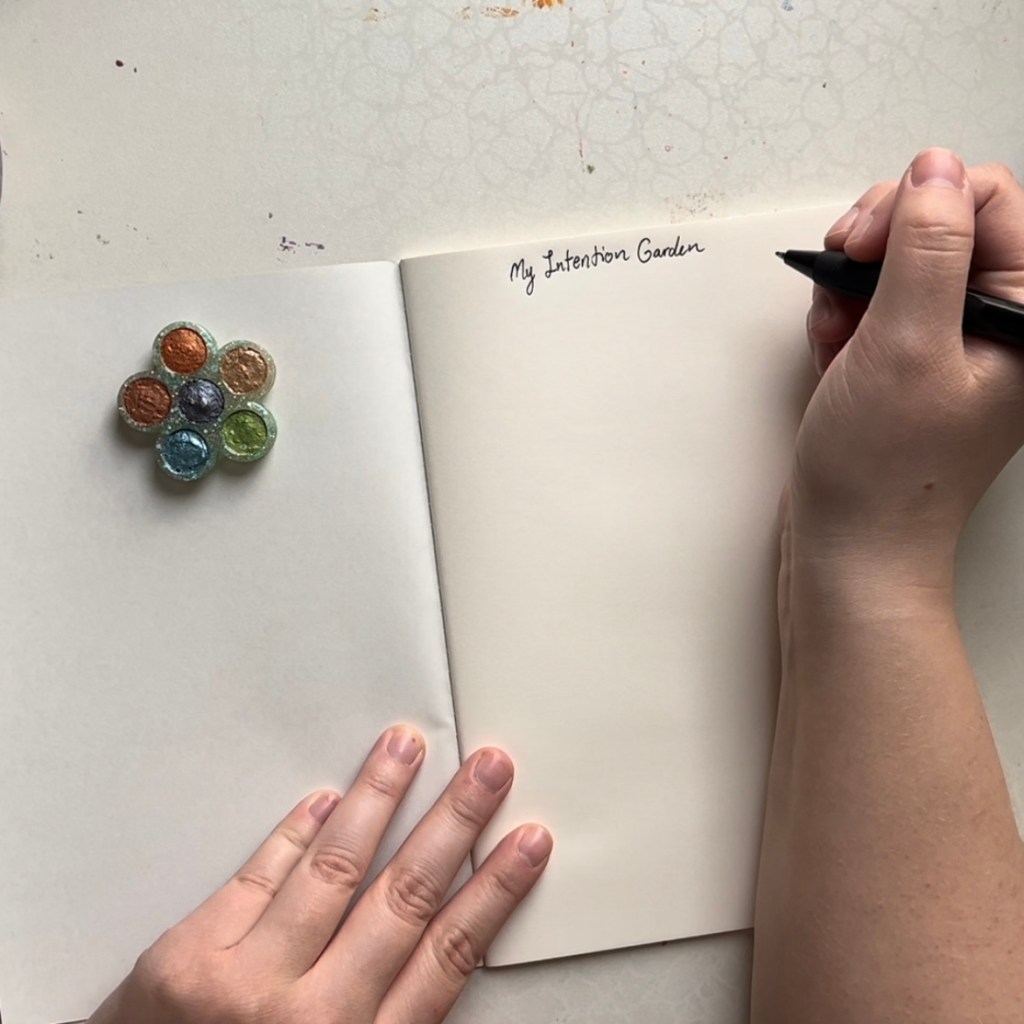
Step 2: Create Your Sacred Space
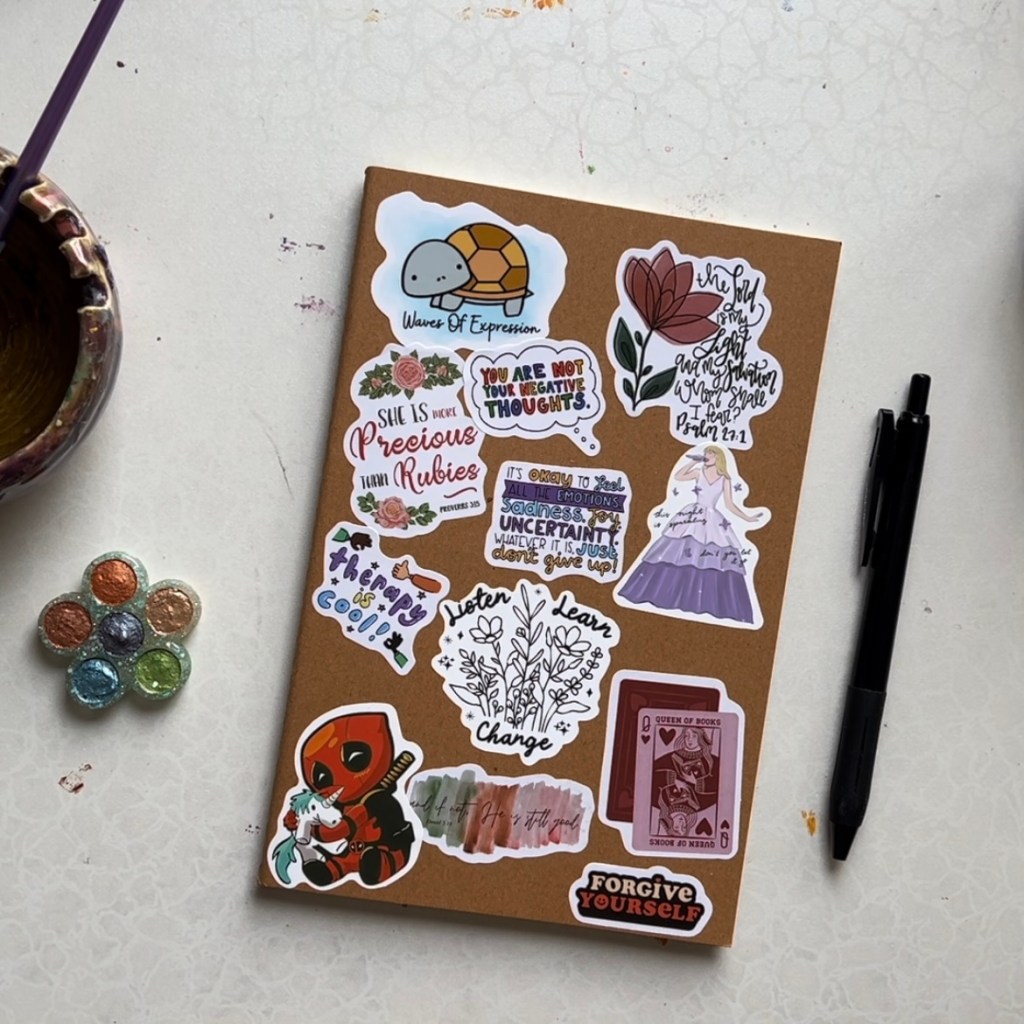
Find a quiet, comfortable space where you can paint without distractions. Set up your painting materials: watercolor paper, brushes, and a selection of paints. You may also want to have a journal or a piece of paper nearby to jot down your thoughts or reflections throughout the process. I recommend using a specific journal you set aside just for art and processing. Often we feel overwhelmed to create perfection, but within my specific journal I know it is used only for therapeutic art practices and it helps alleviate that pressure. I do sell these journals on my site if you need one.
Step 3: Center Yourself with Breath
Before you begin painting, take a few deep breaths to center yourself. Close your eyes and inhale slowly through your nose, allowing your belly to expand. Exhale gently, releasing any tension. As you breathe, silently repeat the qualities or attributes you wish to cultivate, such as “peace,” “clarity,” or “gratitude.”
Step 4: Begin Your Garden
Start painting your garden with soft, flowing strokes. Let the watercolor paint blend naturally on the paper, without worrying about creating a perfect image. The shapes and colors you use will symbolize the attributes you wish to nurture. You may choose to paint flowers, trees, or abstract forms, depending on what feels most aligned with your meditation. Let your intuition guide the process.
- Symbolic Elements: Consider including symbolic imagery. For example, a sunflower could represent joy, while lavender might symbolize calmness. The beauty of this practice is that there are no rules—each garden is unique to you and your journey.
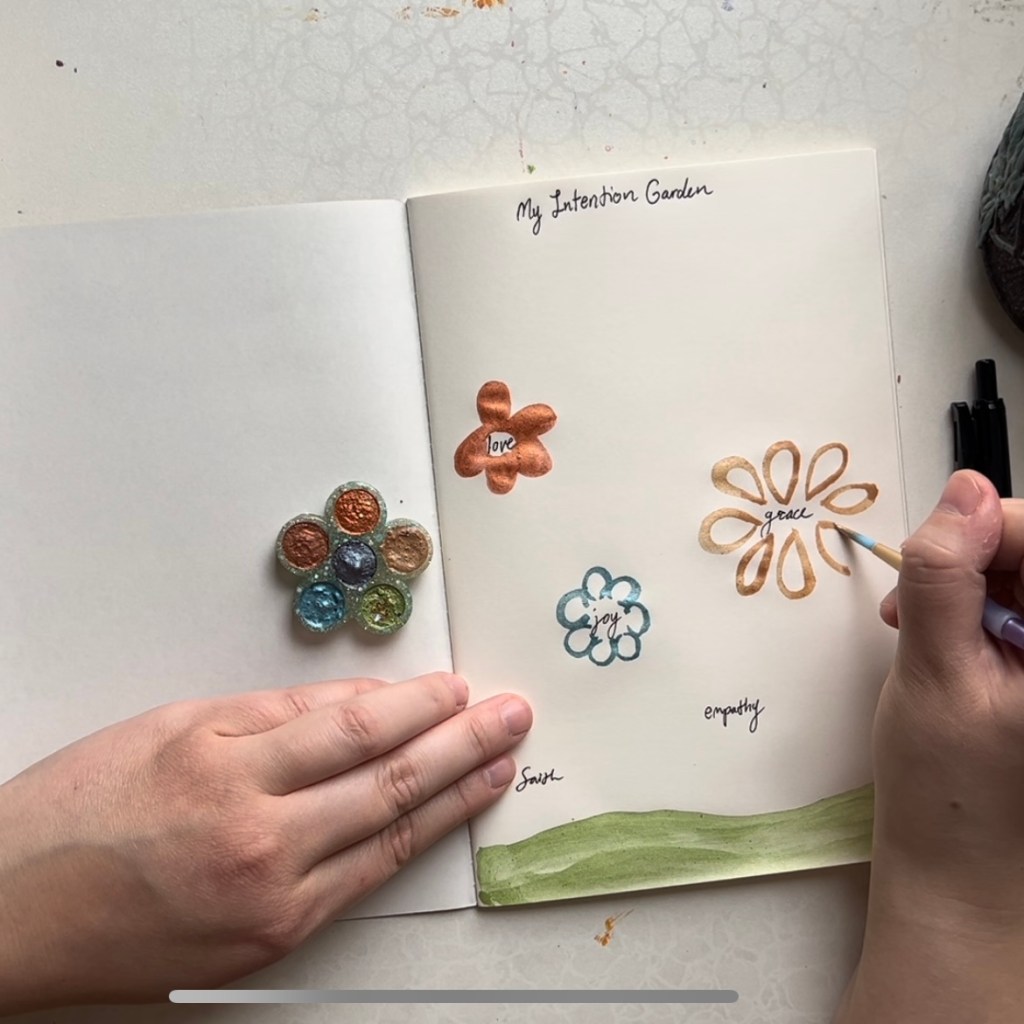
Step 5: Reflect and Connect
As you continue painting, stay present with your emotions and thoughts. Notice how your mood shifts as you bring the colors to life. Reflect on how the attributes you are cultivating begin to manifest in your mind and body.
After completing your painting, sit quietly and allow yourself to absorb the energy of your creation. What thoughts or feelings emerged during the process? Are there any insights or realizations about the qualities you’re bringing into your life?
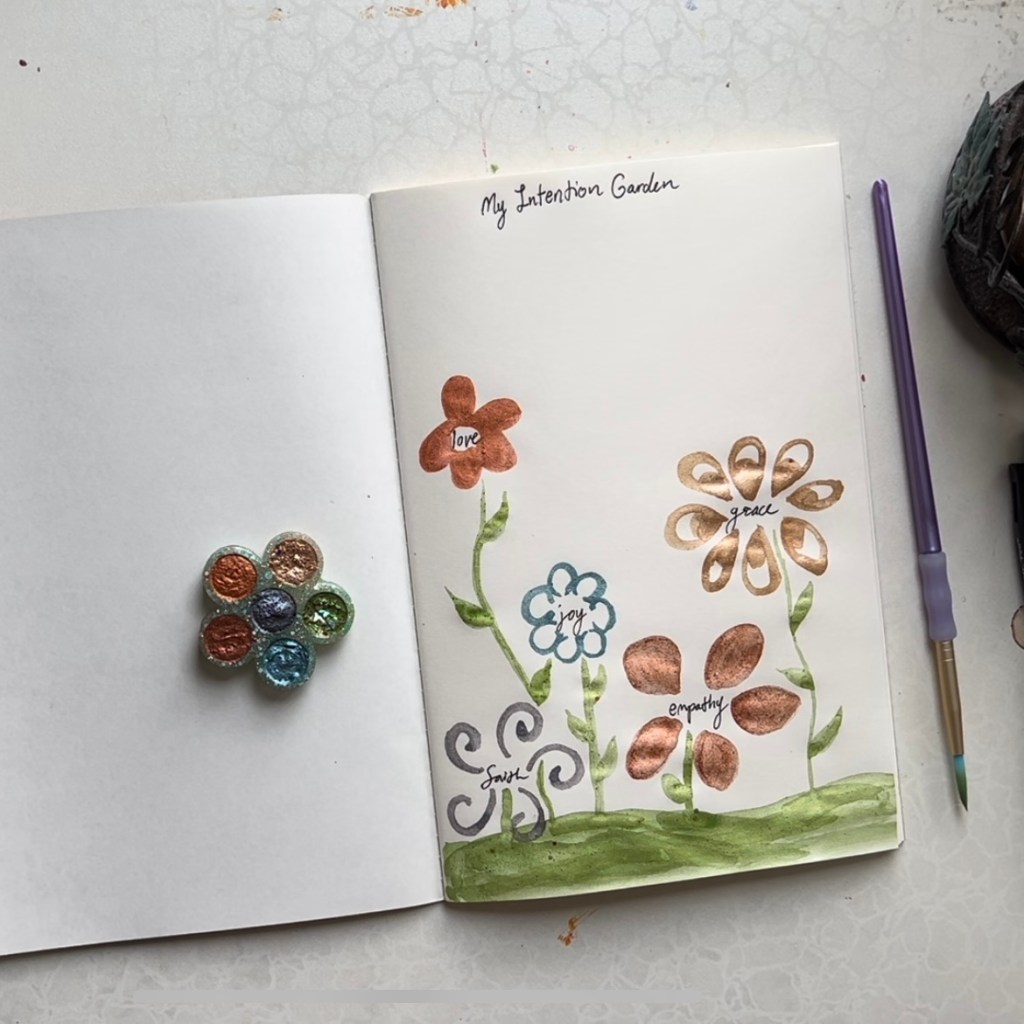
Step 6: Close with Gratitude
Finish your meditation by taking a few moments to express gratitude for the time you dedicated to yourself. Acknowledge the attributes you’ve invited into your life and trust that the seeds you’ve planted will continue to grow.
Conclusion
This Attribute Garden meditation is more than just a creative activity; it’s a holistic practice that nurtures both the mind and the soul. Through the combination of watercolor painting and meditation, you have the opportunity to plant the seeds of your intentions, cultivate positive attributes, and watch them grow within you. It’s a gentle reminder that, like a garden, our inner world requires patience, care, and attention to flourish.
Whether you’re an experienced artist or someone who simply enjoys the beauty of watercolor, this practice can help you tap into a deeper sense of peace and connection. Give it a try—let the colors flow, and let your soul blossom.
If you try out this meditation let me know how it went in the comments!






 WAVES OF EXPRESSION
What did you think of this idea??