In a world that constantly pulls our attention in a thousand directions, finding moments of stillness can be a challenge. One way to reclaim that peace is through art—specifically, through the calming practice of watercolor painting. By combining the soothing nature of watercolor with the mindful practice of breathing, you can create a small, meaningful drawing of a place that brings you comfort and rest. For me, that place is Oregon coast, surrounded by the quiet rhythm of the ocean and the crisp, salty air.
In this post, I’ll guide you through the process of creating a simple watercolor of a place that calms your mind, all while using meditation and breathing techniques to deepen your mindfulness practice. Whether your favorite location is a serene forest, a peaceful beach, or a quiet park bench, this practice can help you reconnect with the peace that place brings you.
Find the video walk through by clicking here!
Step 1: Set Your Intention and Choose Your Place
Before you pick up your brushes, take a few moments to set an intention for this experience. Close your eyes and take a few slow, deep breaths, letting go of any tension in your body. As you inhale, think of the place that brings you peace. Visualize it as vividly as you can—what colors are there? What sounds do you hear? What does the air feel like?
For me, I think of the coast with waves crashing against the cliffs. The air is crisp and fresh, and there’s an overwhelming sense of calm as I listen to the gentle hum of the ocean breeze. This image fills me with peace.
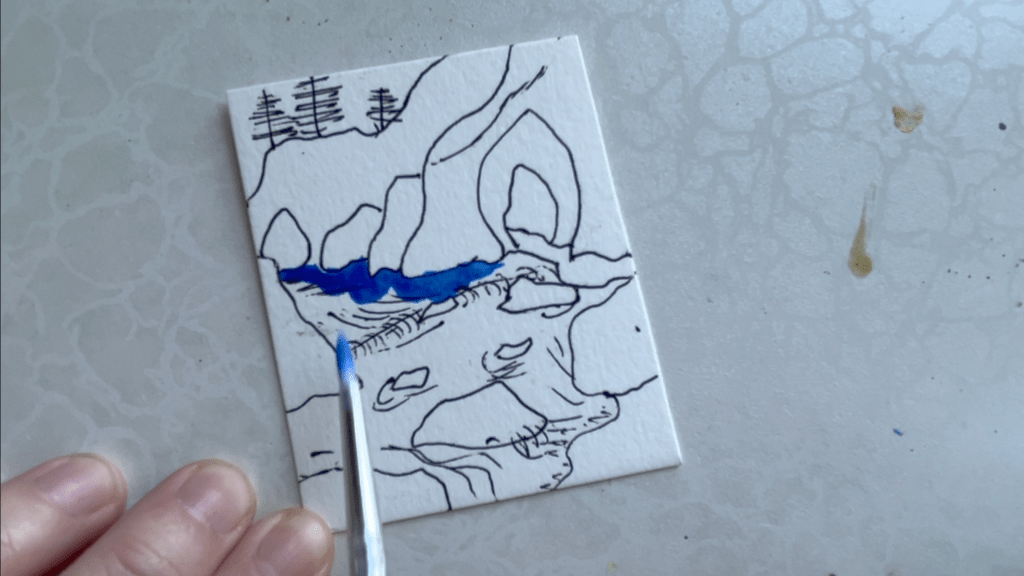
Step 2: Gather Your Materials and Create Your Space
Now, let’s set up your painting space. It doesn’t need to be anything elaborate—just a comfortable spot where you can focus without distractions.
You’ll need:
- Watercolor paper
- Watercolor paints (I recommend my very own Sparkle Watercolor collection!)
- A round watercolor brush (size 6 or 8 is ideal)
- A pencil or pen for sketching
- Clean water
Ensure your space feels calming—perhaps you’d like to light a candle or play soft instrumental music. Allow your space to enhance your connection to your artwork and to the sense of restfulness that you are creating.
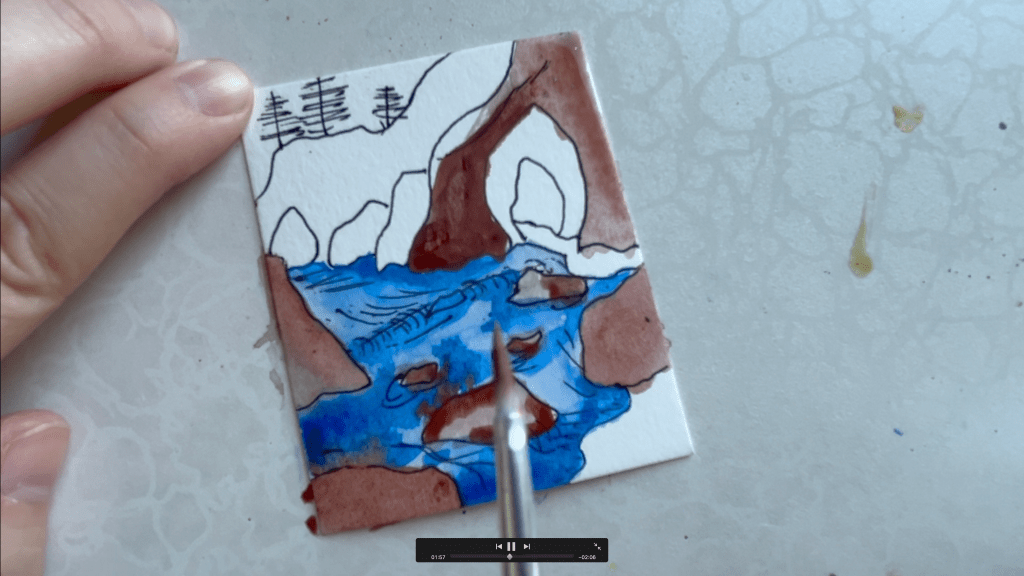
Step 3: Mindful Breathing and Sketching
Begin by sitting comfortably and taking a few deep breaths in through your nose and out through your mouth. Let the rhythm of your breath settle your mind. As you breathe in, feel your lungs expand and fill with air; as you breathe out, imagine releasing any stress or tension.
When you’re ready, lightly sketch the outline of the place you are painting on your watercolor paper. Keep the lines soft and light or, you can use a pen if you want your lines to show—this is not about perfection but about expression. If you’re painting something like a lighthouse, focus on the shape of the structure, its silhouette against the sky. As you sketch, continue to breathe slowly and mindfully. With each breath, feel yourself becoming more connected to your subject.
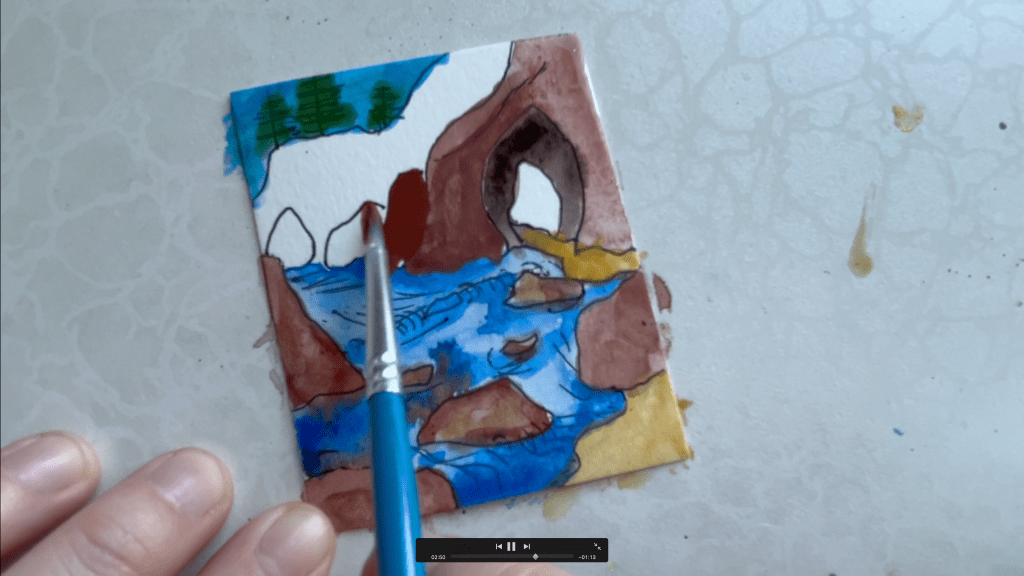
Step 4: Painting Mindfully
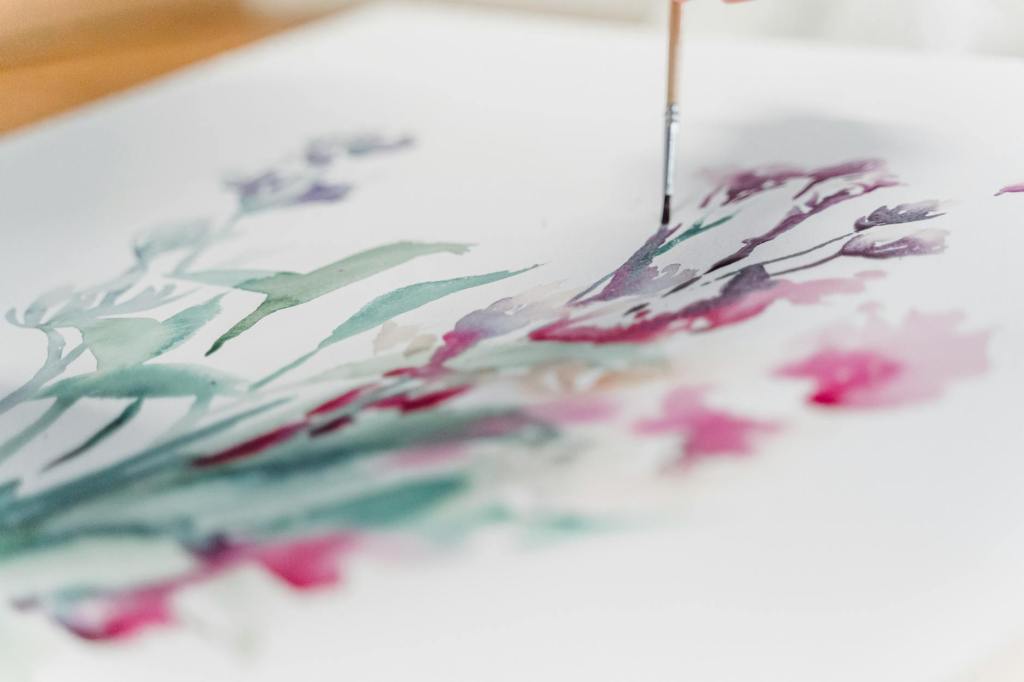
Now, let’s move on to the watercolor painting. The beauty of watercolor is its fluidity—let the paint flow naturally, just as you allow your breath to flow naturally. Remember to breathe with each stroke, letting the act of painting become an extension of your breath.
As you apply paint to the paper, pay attention to how the colors move and merge. Don’t rush; take your time. If you find yourself feeling tense or distracted, return to your breath. Inhale deeply, and as you exhale, let go of any pressure to make your work “perfect.”
Step 5: Adding Details with Care
Once the background is complete and dry, start adding more specific details to your painting. This could be the outline of the lighthouse, a distant sailboat, or a few rocks along the shore. As you add details, maintain your mindfulness by taking deep breaths in and out. Let your breath guide your brushstrokes, just as it guides your mind toward calm.
I use glitter and metallic watercolors at this point to emphasize highlights and focus points, such as the waves. You can find the watercolors I use here through my online store.
As you build up these layers, continue to breathe slowly and mindfully, letting each layer of paint be an invitation to deepen your connection with the place you’re capturing.
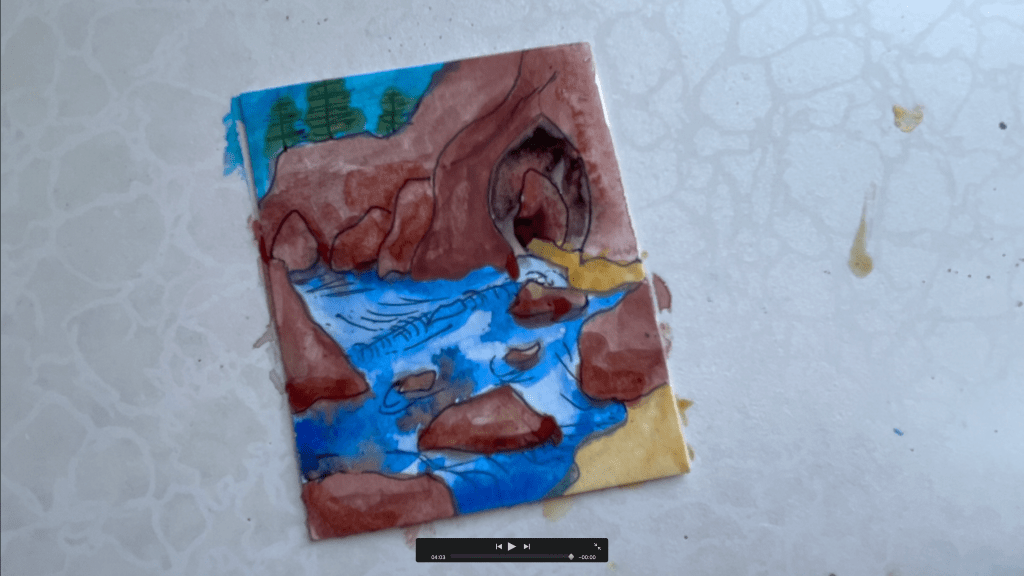
Step 6: Reflect and Close the Practice
Once you’ve completed your painting, take a moment to reflect. Sit quietly with your artwork in front of you. How do you feel after this process? Does the place you’ve painted still resonate with you? What emotions or thoughts arise as you look at the scene you’ve created?
Take a few more deep breaths, allowing yourself to feel grateful for the moment of stillness you’ve cultivated. Whether you’ve painted the Oregon coast, a distant mountain peak, or a quiet garden, your artwork is a reminder of the peace that place brings you.
Step 7: Incorporating the Practice Into Your Daily Life
As you finish your painting, take a moment to reflect on how you can bring this practice into your daily life. Mindful art is not just about creating something beautiful—it’s about grounding yourself in the present moment, even during the busiest of days.
You can try this practice whenever you need to reconnect with a place of comfort or calm. Whether you’re sketching and painting, journaling, or simply breathing and reflecting, taking time to tune into the peacefulness of a location in your mind can help you cultivate more moments of rest and mindfulness throughout your day.
If you would like more art meditation resources check out my storefront and blog pages through the menu above.


 WAVES OF EXPRESSION
Leave a reply to Tim Buhler Cancel reply